
Water from a leaking heater follows the slab toward the wall and goes under the bottom plate. The garage floor drains out the door and looks dry, while the room behind the wall takes the water.
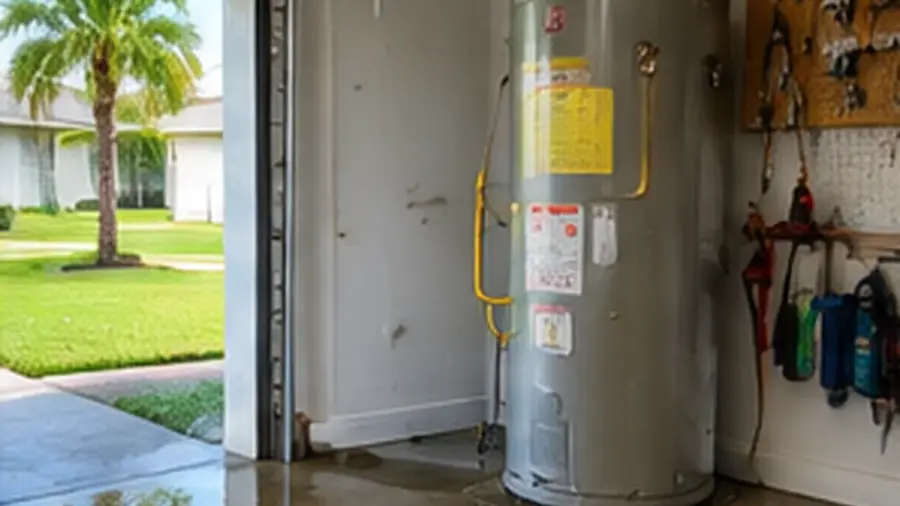
A water heater leak is one of the sneakiest kinds of water damage in a Vero Beach house. The tank sits in the garage, the leak runs along the floor, and the wall next to it soaks it up. By the time a bedroom closet smells damp, the water has been moving for days.
Washers, dishwashers and ice makers do the same thing on a smaller scale. A hose lets go, a drain line slips or a fitting weeps, and the water goes where gravity takes it. We trace it, remove it and dry the wall it crept into.
Typical water category
1 early, 2 after a day or two
Mold timing
Often starts on the wall behind the unit
Do this first
Close the supply valve and turn the unit off at the breaker
Call us if
The garage floor is damp or a shared wall feels wet
Which appliance, which kind of damage
| Appliance | How it leaks | Typical water category |
|---|---|---|
| Tank water heater | Tank failure, fitting or relief valve | Category 1 if caught early, 2 after a day or two |
| Washing machine | Burst or loose supply hose, drain overflow | Category 2 |
| Dishwasher | Door seal, inlet valve or drain hose | Category 2 |
| Ice maker or fridge line | Small line that cracks or loosens, often hidden | Category 1 at first, 2 if it ran for days |
| Refrigerator or freezer | Door gasket or defrost drain overflow | Category 1 or 2 |
How we handle an appliance leak
- Shut off water and power. Close the shutoff on the line to the appliance and turn the unit off at the breaker. Gas heaters need the gas control set to off.
- Find where the water went. We read the walls on both sides, the floor and the cabinet bases with a moisture meter.
- Extract and open up. Standing water comes out. Wet baseboard and the bottom strip of drywall are removed when readings call for it.
- Dry the wall cavity. Air movers and a dehumidifier run until the wall, bottom plate and floor edge read dry.
- Check for mold. The wall behind a garage water heater is a common mold spot, so we look there before rebuilding.
Signs an appliance is leaking
- Rust or a wet ring around the base of the water heater
- Damp carpet along a wall that backs onto the garage
- A baseboard that swells next to the laundry room
- Hissing or dripping from a tank relief valve
- Water stains under the dishwasher or fridge
- A higher bill with no change in how you use water
Why garage-side leaks cause trouble here
Garages in Florida homes are usually built with a sloped slab so rain and wash water run out the door. That slope also moves a heater leak along the floor toward the lowest point, which is often the wall plate between the garage and the house.
Water heaters here work in a hot climate and sit in air that is humid most of the year, so tanks and fittings corrode on the outside as well as the inside. A small weep at a fitting can run a long time before a stain shows.
Where to look for a hidden appliance leak
Check the drain pan under the heater for water and rust flakes. Run a hand along the garage side of the shared wall at baseboard height. Look at the washer hose connections for crusty mineral buildup, which points to a slow weep. Lift the dishwasher kick plate and check for a dark, damp floor. Take photos of anything you find before you wipe it up.
Questions about water heater and appliance leaks
SafetyIs it safe to touch a leaking water heater?
Not until it is off. Switch it off at the breaker, close the cold water shutoff on top, and for a gas unit set the gas control to off. If water is touching an outlet, stay clear and call an electrician.
InsuranceWill my policy cover a sudden appliance leak?
Many policies cover sudden discharge from an appliance, but that depends on the policy and the cause. We cannot say what yours will cover. We document moisture readings and photos so you have a clear record.
Drying timeHow long does a wall take to dry after a washer leak?
Often several days, depending on whether the water reached the insulation and bottom plate. We check readings daily and stop when they match a dry wall.
CostDoes replacing the appliance come under your work?
No. We handle the water cleanup and drying. A plumber or appliance technician replaces the unit or hose.
MoldShould I check behind the water heater for mold?
Yes, if the leak ran for more than a day or two. Look at the wall surface and the baseboard for dark spots or a musty smell. A moisture reading tells us if the wall is still damp.