
- Ground and soil
- Low-lying flatwoods with a high seasonal water table
- Common home type
- Concrete slab homes in subdivisions
- Top water risk
- Moisture rising through the slab and street water pushing into garages
- What we check first
- Slab and bottom plate readings, then the garage threshold
Water damage restoration in Vero Beach South, FL often begins with a floor that looks fine and a smell that says otherwise. The area sits about 1.8 miles from Vero Beach on low flatwoods ground, where the water table rises close to the surface in the wet season.
Most homes here are slab construction in subdivisions. That means the floor is concrete, and concrete takes on moisture from below as well as from a leak above. We separate the two before we decide what to dry.
Water damage restoration services we provide in Vero Beach South, FL
What water does in Vero Beach South homes
Moisture coming up through the slab
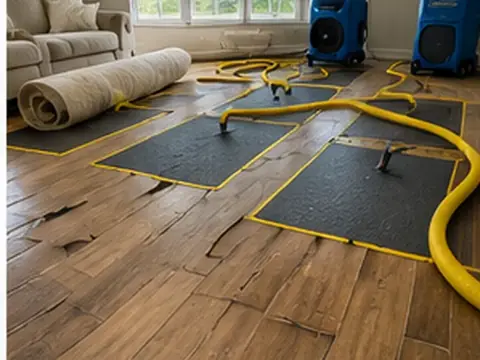
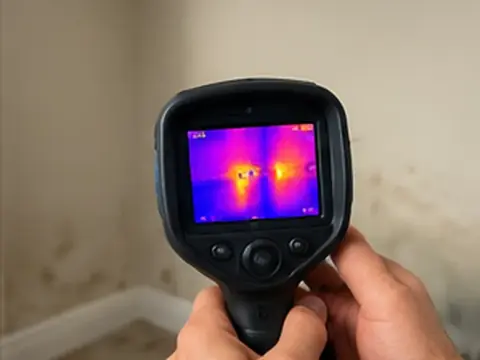
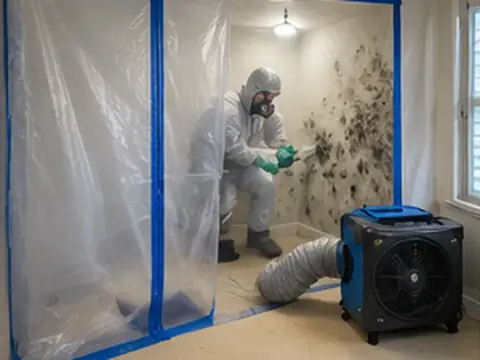
When the ground stays saturated, water can move up through the concrete. You see it as tile that lifts or tents, laminate that warps at the seams, and dark mold at the bottom of drywall where the wall meets the slab. A moisture meter on the slab and the bottom plate tells us if it is coming from underneath or from a plumbing leak.
Garage water after downpours
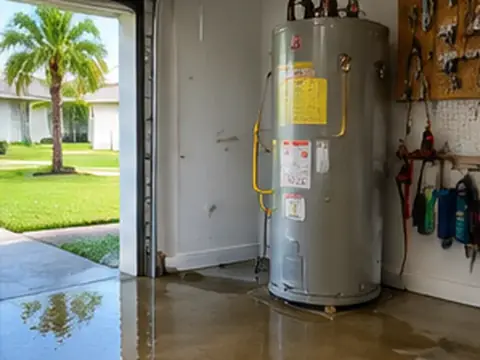
During a heavy rain, streets and swales can fill faster than stormwater drains empty. Water can then push in under the garage door and spread across the sloped floor. Once it reaches the shared wall, it can soak the drywall behind it, so we check that wall even when the garage looks dry.
Why a dry-looking floor can still be wet
Tile and sealed concrete hide moisture well. The surface feels dry while the layers below stay damp for days. We read the floor, the baseboard and the lower wall before we call a room dry, since a damp slab can fail new flooring later.
How water reaches a slab home
Vero Beach South water extraction and drying services near you
Structural Drying
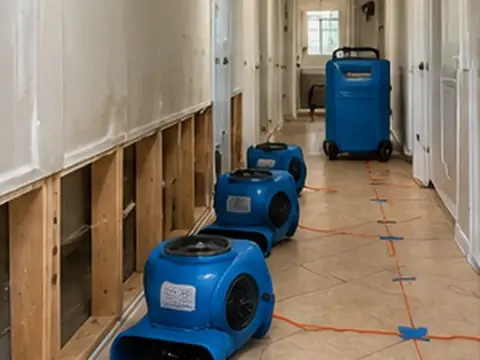
Dries walls, framing and the bottom plate when moisture has been wicking up from the slab.
Water Heater and Appliance Leaks
Garage heaters and washers that send water into the next room.
Other jobs people call us about
| If you are looking for | See |
|---|---|
| Flood cleanup, a flooded garage or standing water removal | Emergency Water Extraction |
| Wet carpet drying and carpet water removal | Water-Damaged Floor Drying |
| Drying out a wet house with dehumidifiers and air movers | Structural Drying |
| A washing machine, dishwasher, ice maker or water heater leak | Water Heater and Appliance Leaks |
| Cupped hardwood, lifted tile or swollen laminate | Water-Damaged Floor Drying |
| Mold testing, mold cleanup or a musty smell | Mold Removal |
Seasonal risk through the year in Vero Beach South, FL
Hurricane season
June to NovemberHeavy storms can raise the water table and flood garages. Check the door seal and swale before the season starts.
Summer rainy season
Summer monthsDaily downpours keep the ground saturated, so slab moisture and garage water are most common now.
Winter dry season
Winter monthsDrier air gives slabs a chance to release moisture, which is a good time to find damp spots.
Snowbird departures
SpringHomes left empty in spring can sit damp for weeks with the AC set high or off.
How we sort slab moisture from a leak
A leak and ground moisture look alike on the surface, so we test before we guess. We start with whether the water meter or bill points to a leaking line. Then we read the slab in several spots, including near exterior walls and well away from any plumbing.
If readings run high everywhere, the ground is the likely source. If they are high in a pattern around one fixture or wall, a line is more likely, and a plumber can pressure test it. Drying alone will not fix a line that is still leaking, and a plumber's repair will not stop a slab that keeps drawing water from below.
A typical Vero Beach South job runs in layers. Surface water goes first. Then we open what has to be opened, usually baseboards and sometimes the bottom strip of drywall, so air can reach the wall cavity. Dehumidifiers and air movers run until readings on the walls and the slab match a dry reference.
If the slab keeps drawing moisture, we tell you, since new flooring over a damp slab can fail and the source may need drainage work from a contractor.
The first 48 hours after water shows up
- 0 hoursShut off the main valve if a pipe is involved and switch off power to wet rooms.
- Hour 6Photograph floors, walls and the garage threshold. Lift small items off the floor.
- Day 1Get moisture readings on the slab, baseboards and the bottom of walls, since surfaces can hide wet layers.
- By 48 hoursMold can begin to grow within 24 to 48 hours, so drying equipment should be running.
- After 48 hoursRecheck bottom plates and cabinet bases. Damp spots left here are where mold appears.
Ground moisture or a plumbing leak
| Clue | Points to ground moisture | Points to a plumbing leak |
|---|---|---|
| Where it shows | Along exterior walls and low spots | Near a fixture, a wall or a line |
| Water meter test | Meter stays still with water off | Meter keeps moving with water off |
| After rain | Worse a day or two after heavy rain | Same in dry weather |
| Pattern | Wide and even across a room | Spreads out from one point |
| Warm spots on tile | Rare | Possible with a hot water line |
Reference notes for homeowners
What to photograph before cleanup
Shoot the whole room, then close-ups of the damage. Include the garage door threshold, baseboards, the bottom of the walls and any tile that has lifted. Add a photo of the water meter if a leak is possible. Dated photos help when you talk to your insurer.
Why laminate and tile fail on a damp slab
Laminate takes in moisture at the seams and swells. Tile is bonded to the slab, and moisture below can weaken that bond or push the tile up until it tents.
When to call right away
Call right away if water is coming under a door, a floor feels warm or spongy, a musty smell shows up or the ground outside is saturated and water stands against the house.
Slab and garage questions, answered
Drying timeWhy does a slab take so long to dry in Vero Beach South?
Concrete is dense and the ground below it stays wet in the rainy season. Drying has to pull moisture out of the slab as well as the walls, so it often takes longer than a simple carpet job.
MoldIs mold at the bottom of my drywall from a leak or from the slab?
It can be either. A moisture reading along the wall shows whether the dampness is coming up from below or down from a pipe. Damp materials can start growing mold in 24 to 48 hours once materials are wet.
SafetyWater came under my garage door. Is it safe to go in?
Turn off power to the garage and any wet rooms if you can reach the panel dry. Street water can carry dirt and other contaminants, so treat it as dirty until we have looked at it.