
- Behind baseboards. Water from a leak wicks up the drywall and sits behind the trim.
- Under sinks. Small drips keep the cabinet floor damp for months.
- AC closets. Condensate and humidity collect around the air handler.
- The wall behind the garage water heater. A slow weep wets the drywall back where no one looks.
- Attic decking. Hot humid air and wet insulation grow mold on the underside of the roof.
Mold removal in Vero Beach follows water. If there was a leak, a stained ceiling or a day of high humidity with the AC off, mold may begin growing as soon as 24 to 48 hours after materials get wet. It likes drywall paper, wood, insulation and dust, and it grows where air does not move.
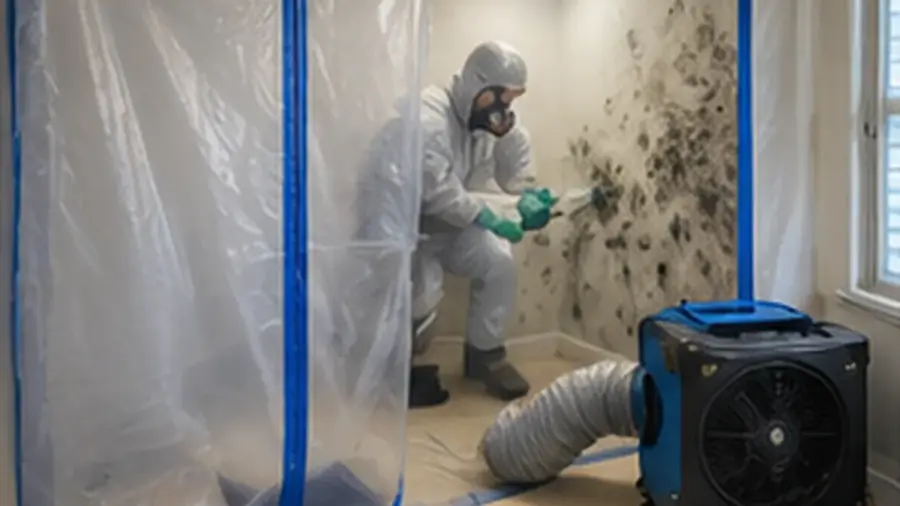
Mold work needs a plan. We find the moisture source first, set up containment so spores do not spread, and remove or clean what is affected. Mold work on our jobs follows containment and HEPA filtration practices from the first day.
Typical water category
Depends on the original water
Mold timing
Can start within 24 to 48 hours of wetting
Do this first
Do not scrub, sand or vacuum it
Call us if
You see growth or smell mustiness that returns
Signs of a mold problem
- A musty smell that returns after cleaning
- Fuzzy or dark spots on drywall, trim or ceilings
- Paint that peels or bubbles from a damp wall
- Allergy-like symptoms that ease when you leave the house
- Visible growth around AC vents or in closets
- Water stains with a ring or discoloration around the edges
How mold remediation works
- Inspection and air testing. We look at the moisture and visible growth. Air samples can be taken and sent to a lab for analysis when testing helps answer a question.
- Containment and negative air. Plastic barriers close off the work area. A negative air machine keeps air flowing into the work area so spores do not drift out.
- HEPA scrubbing. Air scrubbers with HEPA filters clean the air in the work zone while the job goes on.
- Removal and antimicrobial treatment. Mold-damaged drywall, insulation and porous materials are removed and bagged. Surfaces that stay are cleaned and treated.
- Preventing a return. We find and help fix the moisture source, dry the space and give you humidity targets to keep it from coming back.
Testing versus removal
| Situation | What usually makes sense | Why |
|---|---|---|
| Visible mold, known leak | Go straight to removal | Testing will not change what has to be done |
| Musty smell, nothing visible | Inspection, moisture readings and possibly air testing | Locates hidden growth and moisture |
| Mold after water damage in a wall cavity | Open the cavity, then contain and remove | Growth is usually on the back of the drywall |
| Small spot on a hard, non-porous surface | Cleaning may be enough | Hard surfaces can often be cleaned |
Mold in coastal humidity
Vero Beach air carries moisture most of the year. A house that is closed up with the AC off, or an AC that cools but does not dehumidify, can grow mold with no leak at all. We check indoor humidity as well as water damage.
After a storm or a long vacancy, mold is more likely. Seasonal homes that sat closed for months often have growth in closets, on walls behind furniture and along window sills.
Estimate a typical range for mold removal
Typical range only. Your price depends on the inspection.
Typical ranges for mold removal
| Affected area | Nothing removed | Drywall and flooring removed |
|---|---|---|
| Under 200 sq ft | $450 to $5,000 | $550 to $9,000 |
| 200 to 500 sq ft | $1,800 to $12,500 | $2,300 to $22,500 |
| 500 to 1,000 sq ft | $4,500 to $25,000 | $5,850 to $45,000 |
| 1,000 sq ft and up | $9,000 to $50,000 | $11,700 to $90,000 |
Typical range only. Your price depends on the inspection.
What to avoid before help gets there
Do not scrub or sand mold, and do not use a household vacuum on it. Both throw spores into the air. Do not point a fan at it, and keep the AC off if you suspect mold in the ducts. Do not paint over it, since paint hides the growth while it continues underneath.
Keep the area closed off and take photos. Stop any active leak so the moisture source does not keep feeding it.
Questions about mold removal
MoldCan I just clean mold with bleach?
On a small hard surface, cleaning may work. On drywall, wood or insulation, bleach does not remove the growth, and the moisture source is still there. Larger areas need containment so spores do not spread.
SafetyDo I need to leave the house during mold removal?
Not always. Containment keeps the work area separate from the rest of the house. If the area is large or the HVAC is involved, we may suggest you stay elsewhere.
InsuranceWill insurance cover mold?
Many policies cover mold only if it follows a covered water loss, and some limit or exclude it. Read the mold section of your policy and raise it with your agent. We cannot promise coverage.
CostWhat decides the cost of mold removal?
The size of the area, what materials are affected and how much containment is needed. It also depends on whether the moisture source has been fixed.
Drying timeHow long before mold can come back?
If the moisture is gone and humidity is controlled, it should not. If a leak or high humidity returns, mold can start growing again within 24 to 48 hours.