How a garage leak reaches the bedroom
- 1
The leak. A tank fitting, hose or valve lets go in the garage.
- 2
The slope. Water follows the sloped floor toward the shared wall.
- 3
The wall plate. It slips under and around the bottom board.
- 4
The drywall. Paper and insulation wick it up inside the room.
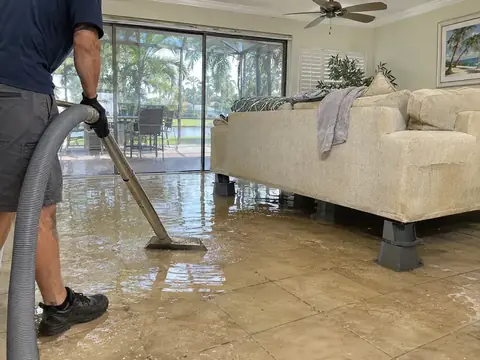
A wet bedroom carpet next to a garage rarely starts in the bedroom. It starts at the water heater, the washer or the utility sink on the other side of the wall, and the water goes where the floor lets it go.
In Vero Beach homes the garage and the living space often share one slab with a wall built on top. That detail decides where the water travels, so it is worth understanding before a leak happens.
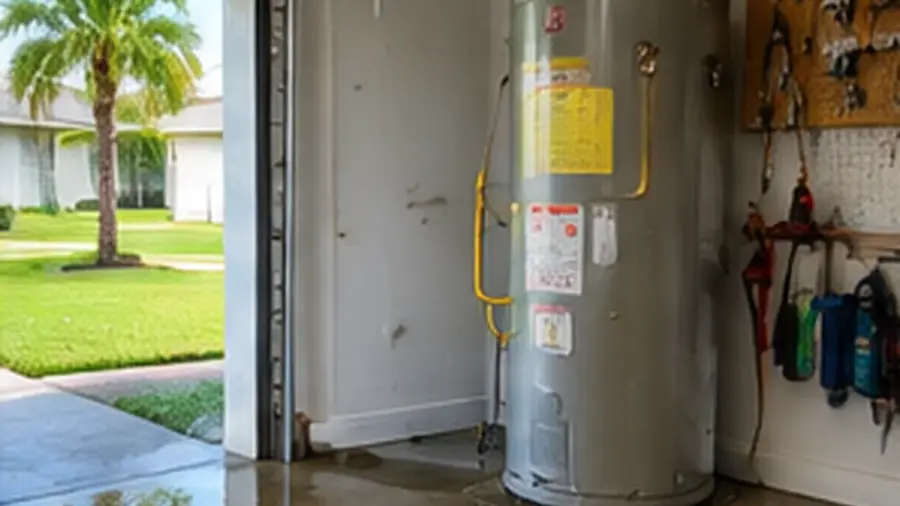
How the water finds the wall
Garage floors are poured with a slope so rain and wash water run out the door. A leaking tank or hose sends water along that same slope. If the lowest point near the leak is the shared wall, the water runs along the base of it.
The bottom plate of the wall is a board resting on the slab. Water slips under and around it, and drywall paper pulls it upward like a wick. The wall can be wet a foot high before any stain shows.
Why the garage looks dry
Most of the garage water leaves through the door or evaporates in the open air. Concrete stays damp-looking for only a short time, so by the time anyone checks, the garage looks fine.
The room behind the wall is closed, carpeted and cooled by the AC. Water there has nowhere to go, so damage shows up inside first, as a damp smell, a swollen baseboard or carpet that feels cool.
What the water does inside the wall
Wet insulation packs down and holds water against the drywall. The paper on the back of the board is food for mold, and a dark closet corner is a good place for it to grow.
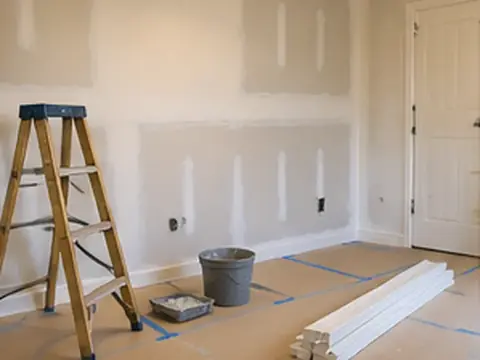
Left alone for a few days, the lower strip of drywall can crumble, the baseboard can swell and the carpet pad can sour. Taking out a strip of wall now is far smaller than replacing a room later.
Who does what after a garage leak
A plumber and a restoration crew do different jobs, and you usually need both. The plumber replaces the failed part, whether that is a tank, a relief valve or a supply hose. The cleanup side removes the water, dries the wall and floor, and checks for mold.
Doing only one leaves a gap. A new water heater in a house with a wet wall still has a wet wall. A dried wall with an unrepaired hose will be wet again next month. Tell each company what the other is doing, and share your photos with both so nobody starts from nothing.
Garage setups that make leaks worse
A few common habits hide leaks until they have run a long time. Storage boxes stacked against the shared wall block your view of the baseboard and soak up water. A tank set straight on the slab with no drain pan gives a slow weep nowhere to go but the floor.
Laundry nooks built inside the garage have the same problem on a smaller scale. A hose connection behind a washer is hard to see, and a drip there can run for weeks. Pulling the machine forward twice a year and looking at both hose fittings takes five minutes and is the cheapest inspection in the house.
If you have a drain pan under the heater, check that its own drain line is clear. A pan full of water is a warning, not a safeguard.
Repair or replace the water heater
Once the leak is found, you face a choice. A leak at a fitting, a valve or a hose can be repaired in an hour. A tank that is leaking from its body has corroded through, and no repair holds. Many tanks last around a decade, depending on the water and how well the unit is looked after, so a leaking older tank is usually a replacement.
Replacement is also a good moment to fix what made the leak costly. A drain pan with a pipe to the outside, a shutoff valve you can reach and a clear gap along the wall all make the next failure smaller. Some owners add a leak sensor that sounds an alarm, which works best when someone is home to hear it.
While the plumber works, deal with the wall. Photograph it, take a moisture reading and keep the notes with your records. Our guide to what to do in the first hour after a pipe bursts covers the same first steps for any sudden leak, and how homeowners insurance often treats water damage explains how the cleanup and the repair are often handled separately in a claim.
Where to look this week
You can check without tools. Put your hand on the wall at baseboard height on the living side. Look at the base of the water heater for rust flakes or a wet ring. Pull the washer out and look at the hose fittings. Check the drain pan under the tank.
- Rust or crust on tank fittings
- Baseboard that looks darker than the wall
- A musty smell in the closet on the garage side
- Carpet that feels cooler or damper near the wall
When to call
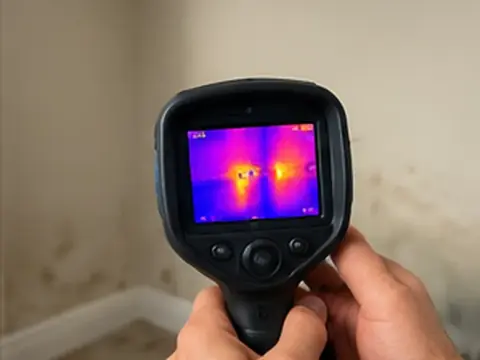
If any of that turns up, a moisture reading will tell you how far the water went. Our water heater and appliance leak cleanup page explains the process, and homeowners in places like Florida Ridge can read about water damage help in Florida Ridge before they call.
Shut off the water to the appliance first, switch off its power and take photos of what you see.
Questions readers ask
CostDo I need to replace the whole water heater after a leak?
Not always. A loose fitting or a failed valve can be repaired. A tank that has rusted through has to be replaced. A plumber can tell you which you have.
MoldHow soon can mold start behind a wet wall?
Within about one to two days in warm, humid conditions, which is why a leak that ran over a weekend deserves a quick moisture check.
InsuranceShould I report a water heater leak to my insurer?
Read your policy first and ask your agent how sudden leaks are treated. Take dated photos before cleanup, and keep any moisture readings.