
| Inches of water | Equipment used | What happens next |
|---|---|---|
| A film to under 1/4 inch | Wet vacuums and squeegees | Readings along baseboards and under door thresholds to see how far it spread. |
| 1/4 inch to 1 inch | Portable extractors | Carpet and pad are lifted and checked. Pad that has soaked through usually does not go back down. |
| 1 to 6 inches | Submersible pumps, then extractors | Furniture is moved, and drywall may be cut a few inches up if water is wicking. |
| Over 6 inches | Heavy-duty pumps | Power to the area is shut off first. The structure is checked before any drying equipment goes in. |
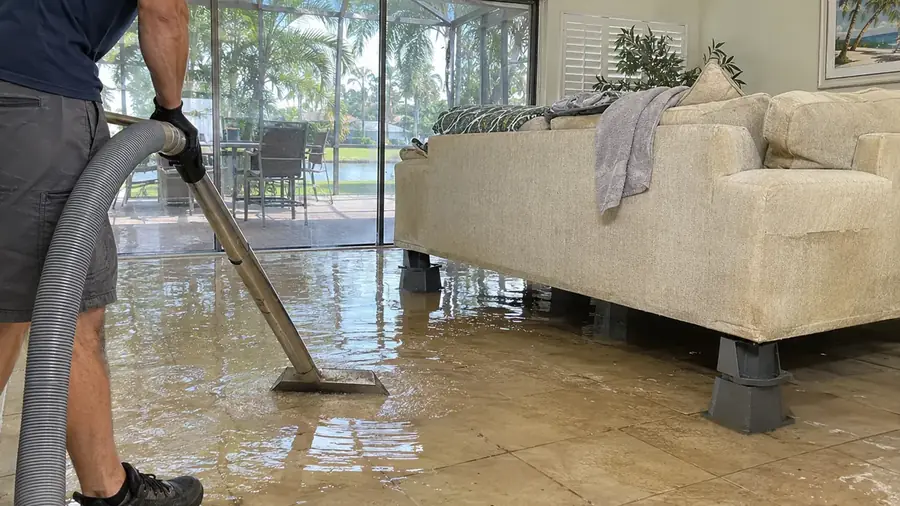
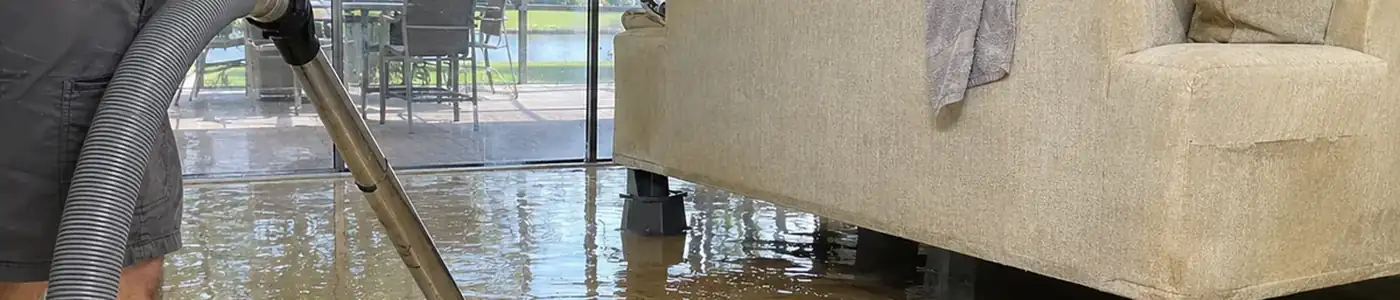
Emergency water extraction in Vero Beach starts with getting standing water out before it soaks into drywall, carpet pad and the bottom of your cabinets. Water moves quickly across a slab floor. It spreads thin, runs under baseboards and finds every low spot in the room.
Pumping the floor is only half of the job. Water you cannot see sits inside wall cavities and under flooring, so we take moisture readings around the room before we call the extraction finished.
Typical water category
1 to 3, depending on the source
Mold timing
Can start within 24 to 48 hours
Do this first
Stop the source and switch off breakers for wet rooms
Call us if
Water is deeper than a film or has reached the walls
Signs you need water pumped out
- Standing water or a shiny film across the floor
- Carpet that squishes when you step on it
- Baseboards that look darker than the wall above them
- Water collecting at a garage door line or under a water heater
- A toilet, tub or sink that keeps running over
- A musty smell within a day of the leak
How we handle extraction
- Stop the source. We help you shut the main valve or the supply line to the fixture, and switch off breakers for the wet rooms.
- Size up the water. We check the depth, how far it spread and whether it came from a clean or a dirty source.
- Pump and extract. Submersible pumps handle deep water. Extractors then pull water out of carpet, pad and low spots in the floor.
- Check what you cannot see. Moisture meters and a thermal camera show water behind baseboards and under flooring.
- Hand off to drying. Once the standing water is gone, air movers and dehumidifiers take over. That stage is covered under structural drying.
Pumping water out of a slab home
Many Vero Beach homes sit on a single concrete slab, so water has nowhere to drain down to. It spreads across one flat surface and can travel from the laundry room to the hall closet before anyone grabs a mop.
Summer rain adds a second problem. On the mainland the ground holds a high seasonal water table, so the yard can be saturated while we are pumping inside. We plan where the discharge goes so it does not run back toward the house.
Extraction methods and where each fits
| Method | Best for | Limits |
|---|---|---|
| Wet vacuum | Small spills and thin films of water on hard floors | Slow once water is deeper than a puddle |
| Submersible pump | Standing water over an inch deep, such as a flooded garage or utility room | Leaves a thin layer that still needs an extractor |
| Portable extractor | Carpet, pad and tight spots like closets | Only reaches the surface, not water inside walls |
| Truck-mounted extractor | Large areas and commercial spaces | Needs access for hoses and a place to park |
Estimate a typical range for water extraction
Typical range only. Your price depends on the inspection.
Typical ranges for water extraction
| Affected area | Clean water, nothing removed | Category 2, drywall and flooring removed |
|---|---|---|
| Under 200 sq ft | $250 to $800 | $250 to $1,900 |
| 200 to 500 sq ft | $250 to $2,000 | $400 to $4,700 |
| 500 to 1,000 sq ft | $650 to $4,000 | $1,050 to $9,400 |
| 1,000 sq ft and up | $1,350 to $8,000 | $2,100 to $18,800 |
Typical range only. Your price depends on the inspection.
While you wait for the crew
Lift small rugs, electronics and loose items onto a counter or bed if you can do it safely. Pull photographs and paper files off low shelves. Leave heavy furniture where it is, since dragging it through water can hurt your back and scratch the floor. We move what remains when we set up.
Questions about emergency water extraction
SafetyIs it safe to walk through standing water in my house?
Not until the power is dealt with. Water and electricity do not mix, so shut off the breakers for the wet rooms if you can reach the panel without stepping in water. If the panel is in the wet area, stay out and call us.
Drying timeHow long does water extraction take?
One wet room can often be pumped out in a couple of hours. A larger spread, or deep water in a garage, takes longer. Extraction is the first stage. The drying that follows usually takes several days.
CostWhy does it cost more when the water is dirty?
Dirty water needs protective gear, more careful disposal and removal of materials that cannot be cleaned. Clean supply-line water is less work, which is why the category matters when we estimate.
InsuranceShould I take photos before the water is pumped out?
Yes. Take photos and video of the water line on walls and furniture before anything is moved. We also record moisture readings, and you can share both with your insurer.
MoldDoes pumping out the water stop mold?
It helps a lot, but it is not enough alone. Mold growth can begin in as little as 24 to 48 hours, and damp drywall and baseboards keep feeding it. That is why drying has to follow right behind extraction.