
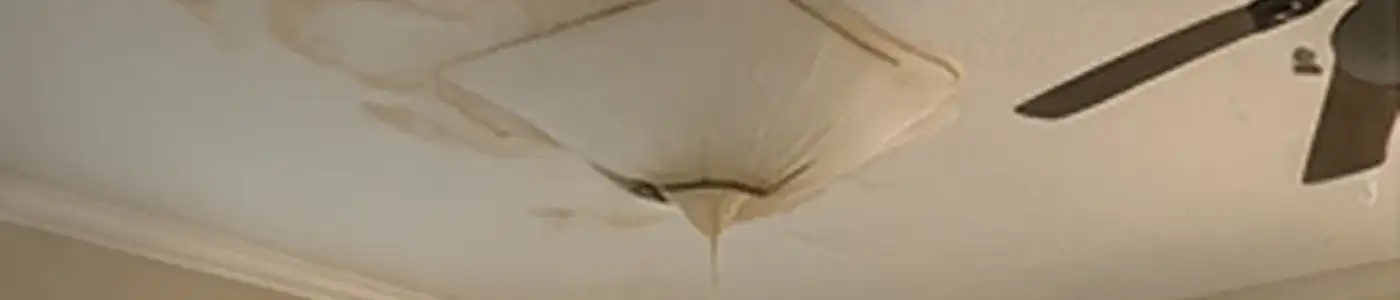
| Stage | What you see | What it means | Stay out of the room? |
|---|---|---|---|
| 1. Stain | Yellow or brown patch, dry to the touch | Old or slow leak. Insulation above may still be damp. | No, but get it checked |
| 2. Soft spot | Paint feels spongy, small bubble | Drywall is absorbing water now | Be careful and avoid standing under it |
| 3. Bulge | Ceiling bows down, water sits behind it | Water is trapped and weight is building | Yes |
| 4. Sag or drip | Drywall hangs, drips or cracks open | Collapse risk and soaked insulation | Yes, and keep others out |
If a ceiling is bulging, a small relief hole into a bucket can be made only by a professional. Do not poke it yourself from underneath.
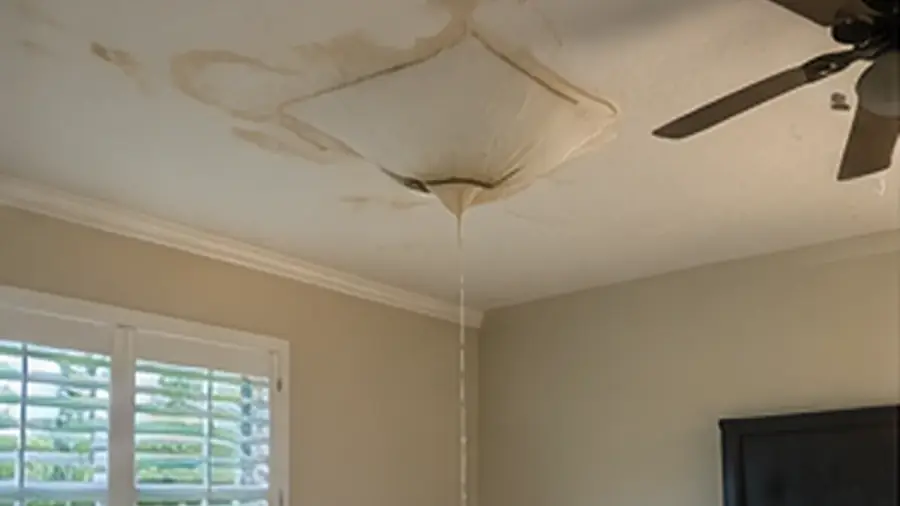
Roof leak and ceiling water damage in Vero Beach often shows up days after the rain that caused it. Water gets past a shingle or flashing, soaks the attic insulation and then spreads along the underside of the roof before it reaches the drywall below.
By the time you see a brown stain, the water has already done work above the ceiling. We find the wet area, drain the water where it is pooled, remove what is too wet to save and dry the rest.
Typical water category
Usually 2
Mold timing
Can start in wet attic insulation
Do this first
Move out from under the stain and put out a bucket
Call us if
The ceiling bulges, sags or drips
Roofs, rain and summer in Indian River County
Summer afternoons bring short, heavy downpours that test a roof harder than slow rain does. A small gap that stays dry most of the year can pour water into an attic in a few minutes, and the insulation holds it.
Between storms the attic stays hot and humid, so wet insulation does not dry the way it would in a cooler climate. Left in place it keeps the ceiling damp for weeks and can grow mold on the underside of the decking.
How we handle a wet ceiling
- Make the room safe. We tell you where to stand, move furniture out and turn off power to the room if water is near the fixtures.
- Find the extent. We look above the ceiling with a moisture meter and thermal camera to see how big the wet area really is.
- Drain and remove. Bulging drywall is opened in a controlled way to release water. Soaked drywall and insulation come out.
- Dry the cavity. Air movers and dehumidifiers dry the framing and remaining materials.
- Check for mold and hand off. We check the cavity before closing it. The roof itself needs a roofer, and we coordinate so repair follows drying.
Where the water came from
| Stain pattern | Likely source | Who to call |
|---|---|---|
| Stain below roofline, worse after rain | Roof leak at flashing, vent or shingle | Roofer, and us for drying |
| Stain near an air handler or bathroom fan | AC condensate or a vent duct | HVAC technician |
| Stain under a bathroom upstairs | Plumbing leak from the room above | Plumber |
| Stain in a ring, repeats after storms | Recurring slow roof leak | Roofer, then a moisture check |
Signs of a roof leak showing in the ceiling
- Yellow or brown rings on the ceiling
- Paint that blisters, peels or feels soft
- Drips that start in heavy rain and stop afterward
- Water near light fixtures or ceiling fans
- Damp or compressed insulation in the attic
- A sagging section that looks heavier than the rest
Temporary steps while you wait for a roofer
Move furniture and rugs out from under the stained area. Put a bucket under any drip and a plastic sheet over what cannot move. Do not climb onto a wet roof. A roofer can tarp the damaged section, and a tarp is often the right short-term fix after a storm.
Photograph the stain with the date, then again a day later to show whether it is growing. If attic insulation is soaked and you can see it from the hatch, tell us so we can plan its removal.
Roof leaks rarely start where the stain shows. Water runs along rafters and decking before it drips, so the entry point can be several feet uphill. When you talk to a roofer, share your photos and tell them which storms the stain appeared after.
Questions about roof leak and ceiling damage
SafetyShould I pop a bulging ceiling?
Not yourself. A bulge holds water and can collapse with force. Move everyone out and call us so it can be released in a controlled way.
InsuranceWill insurance cover roof leak damage to my ceiling?
It depends on the policy, the cause and the age and condition of the roof. Many policies treat sudden storm damage differently from long-term wear. We cannot promise coverage. Dated readings and photos from the job are yours to share with your insurer.
MoldIs mold likely above a stained ceiling?
It can be. If insulation stayed wet more than 24 to 48 hours, mold may have started on the drywall back or decking. We check before we close anything up.
Drying timeHow long does a ceiling take to dry?
Often several days, longer if insulation is soaked. Attic heat helps and attic humidity hurts, so we go by readings.
CostDo I need the roof fixed before you start?
It helps to stop the leak first, or at least tarp it, so the ceiling does not get wet again. We can dry the damage and coordinate with your roofer on timing.