Before you leave for the season
Summer in Vero Beach is when plenty of owners head north and leave the house to itself. A leak that starts a week after you go can run for months, and nobody will hear it.
A short list done on the last day covers most of the risk. Print it above and keep it by the door.
The main valve comes first
Closing the main valve takes seconds and removes the chance of a supply line failing while you are gone. Not sure where yours is? Locate it before you leave and tag it. Test it once so you know it turns.
An irrigation system or a whole-house filter may depend on that valve, so plan for them. A timer-run sprinkler can be put on its own supply, or turned off.
The water heater and appliances
A tank water heater holds dozens of gallons, and a failed tank empties it onto the floor. Turning the heater off at the breaker saves power and lowers the pressure on the tank. A gas unit needs the control set to its vacation or pilot setting.
Ice maker lines are small and easy to forget. They run behind the fridge and fail without noise. Close the valve and empty the bin. Do the same for the washer supply hoses.
The AC is part of the plan
Turning the AC off to save money invites mold. Leave it on and set it so it dehumidifies, which usually means a slightly higher target temperature than you use at home and the fan on auto.
Have the condensate line checked before you leave. A clogged line can overflow while the house is empty and wet the ceiling or closet below the air handler.
A room-by-room list for whoever checks the house
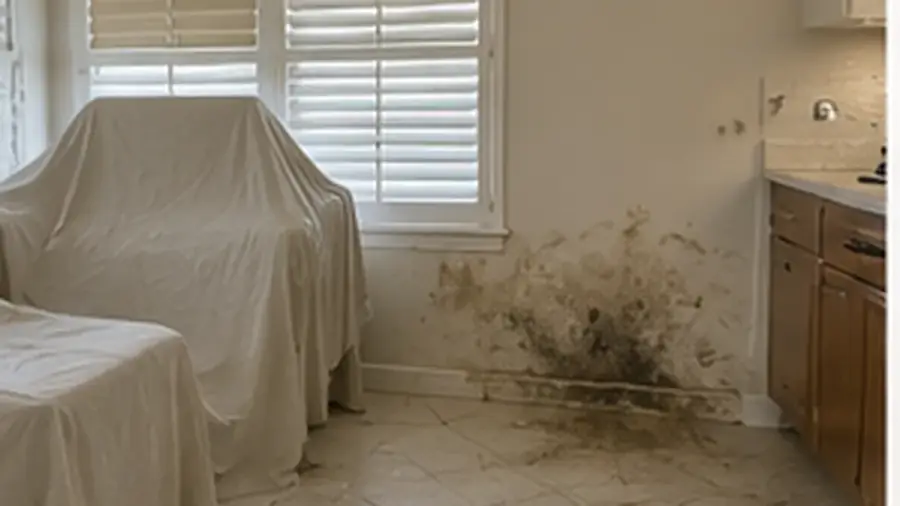
A caretaker does better with a short written route than with a general request to look around. Start at the front door and smell the air. A musty or sour smell on entry is the first thing to report.
In the kitchen, look under the sink and at the dishwasher base. In each bathroom, check under the vanity and around the toilet base for dampness. In the laundry area, look behind the washer and at the floor around it. In the garage, look at the base of the water heater and along the shared wall. At the AC closet, look for water in the pan and a wet floor.
Ask them to text a photo of anything unusual, and to touch the walls at baseboard height in each room, since cool or damp drywall is easy to feel.
What to do when you get back
Walk in before you do anything else and use your nose. If the house smells musty, leave the AC off and call before you open the water. Look at the ceiling in each room and at the floor along exterior walls.
If everything looks right, turn the main valve back on slowly and walk the house while the pipes fill. Listen for hissing, and check under the sinks and at the water heater right away. Run each tap and flush each toilet, then look again at the supply lines.
Read the water meter before you start and again a couple of hours later with nothing running. If the dial moved, something is leaking.
One more tip about the water heater
Check whether your water heater has an expansion tank or a pressure relief valve that has been discharging. A wet floor near a relief valve is a clue that the tank is under strain, and it is much better to find that before you leave than after.
Why humidity belongs on your leaving list
Most owners think of leaks first, and humidity second. In a closed Florida house, humidity alone can grow mold on shoes, closet walls and upholstered furniture over a long summer. The AC does the work of keeping it down, so a failed unit is as risky as a leaking pipe.
A smart thermostat that sends alerts can warn you when the house gets too warm or humid. A caretaker who runs the AC through a full cycle on each visit also helps. If the house smells musty when they arrive, ask them to leave the system off and call before running it, since whether to run the AC after water damage explains when running it makes things worse.
Finally, think about storms. If a named storm heads for the coast while you are away, a second person with a key and your instructions matters. Our notes on hurricane season prep for wind-driven rain include a short list you can hand to a caretaker.
Who checks the house
Ask someone to walk through every couple of weeks. Give them the main valve location, your phone number and a list of what to look for, such as musty smell, stains and drips. A short note on the counter works.
Renting the house out? Add the same instructions to the guest information.
If you come home to water
Shut off the main valve first, photograph everything and leave the AC off if the house smells musty. Our seasonal and vacant home water damage cleanup page walks through what happens next. Owners near Sebastian can also read about water damage restoration in Sebastian.
Questions readers ask
SafetyIs it safe to leave the water on if the house has a leak detector?
A detector helps, but it only works if someone hears the alert and can act. If you are away for weeks, closing the main valve is still the safest choice.
InsuranceDoes my policy have rules for empty homes?
Some do. Policies can limit coverage when a home is vacant for a set period, so read yours and ask your agent before you leave.
MoldCan mold grow even if nothing leaks?
Yes. High humidity in a closed house with the AC off can be enough, which is why leaving the AC on matters.